

Hybrid batteries do not always fail without warning. In many cases, drivers notice changes in fuel economy, performance, charging behavior, or dashboard warnings before the vehicle becomes difficult to drive.
Recognizing these signs early can help you avoid unexpected breakdowns and provide time to compare repair or replacement options. Although these symptoms may indicate a battery problem, they can also be caused by other vehicle systems. A proper diagnostic scan should be performed before replacing the battery.
1. A Hybrid-System Warning Light Appears
The most obvious sign of a possible battery problem is a warning message or dashboard light related to the hybrid system.
Depending on the vehicle, the message may say “Check Hybrid System,” “Hybrid System Warning,” or something similar. The check-engine light may also appear.
These warnings do not automatically mean the complete battery needs replacement. The vehicle stores diagnostic trouble codes that identify the system reporting the problem. A qualified technician should retrieve and interpret these codes before making a repair decision.
Battery-related codes may point to weak battery blocks, voltage differences, temperature issues, cooling-fan problems, or communication faults.
2. Fuel Economy Begins to Decrease
One of the primary purposes of the hybrid battery is to reduce the amount of work required from the gasoline engine. When the battery becomes weak, it may not store or deliver energy as efficiently.
As a result, the gasoline engine may run more frequently. You may notice that your miles per gallon gradually decline even though your driving habits have not changed.
Fuel economy can also be affected by weather, tire pressure, engine condition, driving style, and maintenance issues. However, a noticeable and unexplained decrease may be an early sign that the hybrid system is relying less on the battery.
3. The Battery Charge Level Changes Rapidly
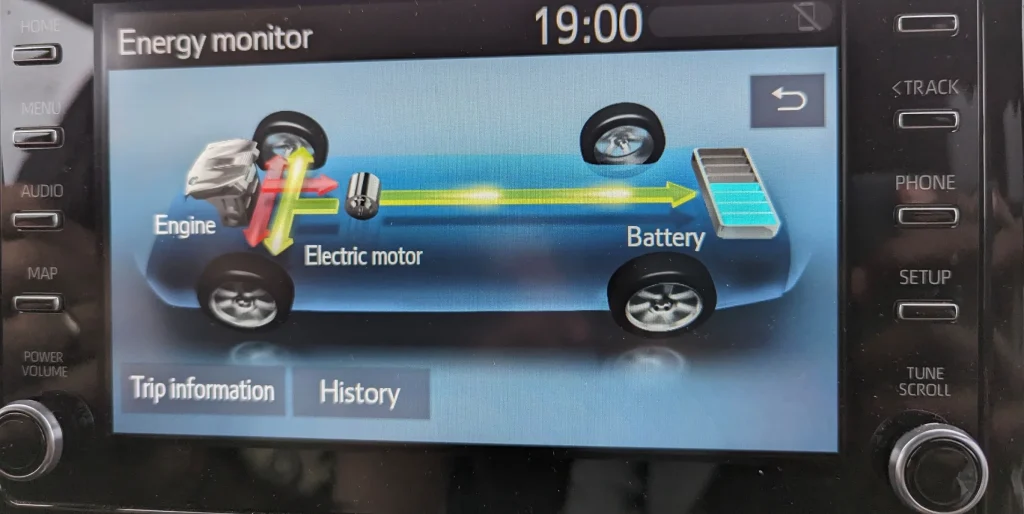
Watch the battery display on the dashboard or vehicle information screen. A healthy hybrid battery normally moves through its charge range gradually.
A failing battery may appear to charge quickly and then discharge just as quickly. The display may move from a high charge level to a low level over a short distance.
This can happen when the battery has reduced usable capacity. The system may show that the battery is charged, but the modules cannot store as much energy as they once could. When the vehicle requests electrical power, the available charge is depleted quickly.
4. The Gasoline Engine Runs More Often
A weak hybrid battery may cause the gasoline engine to start more frequently, remain on longer, or run at times when it previously would have shut off.
Drivers may notice this behavior while stopped, driving at low speeds, or operating in conditions where the vehicle normally uses electric assistance.
The engine may be compensating for a battery that can no longer provide sufficient power. This often occurs together with reduced fuel economy and rapid changes in the battery charge display.
5. Vehicle Performance Feels Inconsistent
Hybrid vehicles combine power from the engine and electric motor. When the battery becomes weak, acceleration may feel different or inconsistent.
The vehicle may hesitate, feel less responsive, or lack the electrical assistance it once provided. In some cases, power may feel normal one moment and reduced the next, depending on the battery’s state of charge.
Performance issues can have many causes, including engine, transmission, fuel, ignition, and electrical problems. Battery performance should be evaluated as part of a complete diagnostic process.
6. The Battery Cooling Fan Becomes Loud
Many hybrid batteries use an electric fan to move air through the battery pack. When battery temperatures rise, the fan may run faster and become more noticeable.
A loud cooling fan can indicate that the battery is generating excessive heat, that the air intake is blocked, or that the fan itself is dirty.
Dust, pet hair, and debris can accumulate in the cooling system and reduce airflow. This can force the fan to work harder while allowing the battery to operate at higher temperatures.
The cooling intake should be inspected and cleaned according to the vehicle manufacturer’s recommendations. Persistent fan noise should not be ignored.
7. The Vehicle Enters Reduced-Power Mode
When the hybrid control system detects a serious problem, it may reduce vehicle power to protect the battery and other components.
Acceleration may become limited, warning lights may appear, and the vehicle may rely heavily on the gasoline engine. Some vehicles may still be drivable, while others may eventually become difficult or impossible to operate.
Reduced-power mode is a sign that the vehicle needs prompt diagnostic attention.
What Should You Do Next?
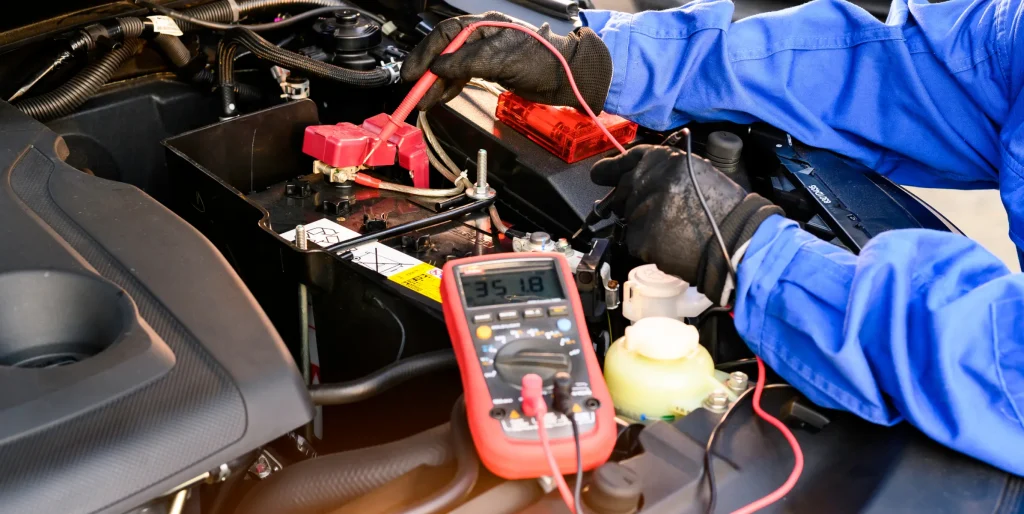
Do not replace the battery based on symptoms alone. Begin with a professional diagnostic scan and inspect the battery cooling system, electrical connections, and related hybrid components.
Ask for the specific diagnostic codes and test results. A proper evaluation can help determine whether the problem involves an individual battery section, the complete battery pack, a sensor, the cooling fan, wiring, or another vehicle system.
If replacement is necessary, compare testing standards, module balance, capacity, warranty coverage, and installation support.
BattMech provides tested and balanced refurbished hybrid batteries designed to offer an affordable alternative to purchasing a new dealership battery.

Related Blogs