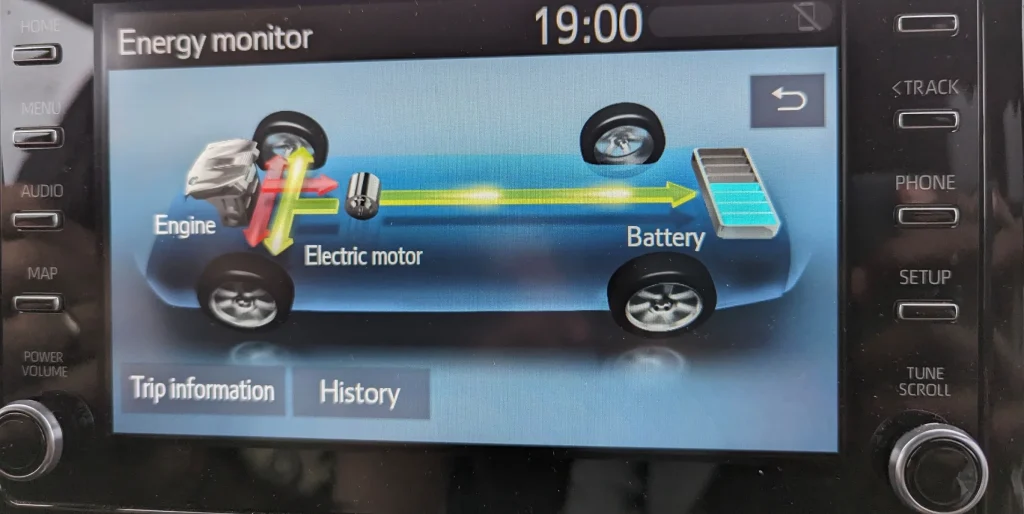

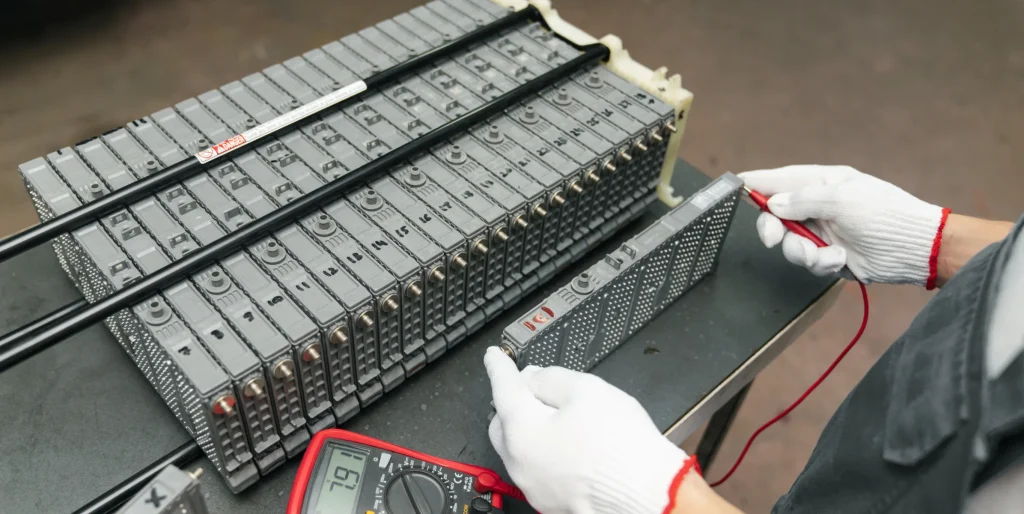

A hybrid battery pack may look like one large battery, but it is actually made up of many individual battery modules connected together. These modules must work as a team. When one section performs differently from the others, the entire battery pack can be affected.
This is why module balance is one of the most important factors when evaluating a refurbished hybrid battery.
How a Hybrid Battery Pack Works
During acceleration, the hybrid battery supplies electrical energy to assist the gasoline engine. During braking and deceleration, the vehicle recovers energy and sends it back into the battery.
This process happens repeatedly every time the vehicle is driven. Each module is expected to accept and deliver energy at a similar rate.
The vehicle’s battery management system monitors groups of modules, often called blocks. If one block reaches a high or low voltage much faster than the others, the system may recognize that the battery is no longer operating evenly.
What Does Module Imbalance Mean?
Module imbalance occurs when one or more modules have different performance characteristics from the rest of the pack.
For example, a weaker module may reach a low voltage sooner during acceleration. During charging, it may reach a high voltage before the surrounding modules are fully charged.
The battery management system must protect the weakest section. Even if most of the battery still has usable capacity, one poorly performing module can limit how much of the pack’s energy the vehicle can safely use.
This can lead to warning lights, reduced fuel economy, rapid charge-level changes, increased cooling-fan operation, and inconsistent hybrid performance.
Why Voltage Matching Is Important
Voltage matching helps identify whether modules are operating at similar electrical levels. At BattMech, modules are balanced so that the voltage difference throughout the battery is less than 0.05 volts at the time of testing.
A small voltage difference helps create a battery pack that charges and discharges more consistently. When modules begin at closely matched voltage levels, the vehicle is less likely to detect one section moving outside the expected range before the others.
However, voltage is only part of the evaluation. Two modules can show a similar resting voltage while having very different capacities.
Capacity Testing Provides a Deeper Measurement
Capacity describes how much energy a module can store and deliver. A module may display an acceptable voltage when it is not under load but lose voltage quickly when electrical power is requested.
Capacity testing evaluates the module through controlled charge and discharge cycles. This helps identify modules that may look acceptable during a simple voltage check but cannot support real operating demands.
For a refurbished battery to perform consistently, modules should be selected based on both voltage behavior and usable capacity.
BattMech batteries are built using modules with more than 5.0 amp-hours of tested capacity. This helps ensure that the modules can store and deliver a meaningful amount of energy while operating as a balanced pack.
The Problem with Replacing Only One Module
When a battery code identifies one weak block, replacing a single module may appear to be the least expensive solution. In some situations, it may temporarily return the vehicle to operation.
The problem is that the other modules have experienced the same age, mileage, temperature, and charge cycles. If one module has failed, others may also be approaching the end of their useful life.
Installing one replacement module without evaluating the rest of the pack can create a new imbalance. The replacement may have a different capacity, voltage response, or rate of self-discharge compared with the older modules.
This is why a complete battery evaluation is more dependable than simply replacing the first module associated with a diagnostic code.
How Imbalance Affects Vehicle Performance
A balanced battery provides more predictable electrical assistance. The vehicle can use the battery over a wider and more stable operating range.
An imbalanced battery may cause the state-of-charge display to rise and fall rapidly. The gasoline engine may operate more frequently because the hybrid system cannot rely on the battery as consistently.
Increased heat may also become a concern. When modules charge and discharge unevenly, some areas of the pack may work harder than others. The cooling fan may run more often as the system attempts to control battery temperature.
What Customers Should Ask Before Buying
When considering a refurbished hybrid battery, ask the supplier:
Were all modules capacity-tested? What minimum capacity standard is used? How closely are the modules voltage-matched? Is the complete battery tested after assembly? What warranty is provided? Are installation instructions available?
A supplier should be able to explain how the battery was tested rather than relying on vague terms such as “reconditioned” or “rebuilt.”
BattMech’s Approach
BattMech focuses on creating battery packs with closely matched modules and verified capacity. Our batteries include modules tested and balanced to less than a 0.05-volt difference, with optimal capacities backed by warranties.
The goal is not simply to remove a warning light. The goal is to provide a complete battery pack that operates consistently, supports the vehicle’s hybrid system, and offers dependable value.


Related Blogs